Apr 6, 2014

20 years since the tragedy in Rwanda


Today marks 20th anniversary of beginning of the genocide in Rwanda. On 6 April, 1994, then president of Rwanda, Mr.Juvénal Habyarimana, was killed with the president of Burundi when their plane was shot down by unknown party while approaching Kigali airport.  After this assassination of two presidents, the genocide began on 7th April. More than eight hundred thousand people were killed. Some claim the number reaches one million.

It is said that the reason of killing was ethnic hatred between minority Tutsi and majority Hutu. However, it is not so simple. What we can say now is that political motivation took advantage of human emotion and instigated simple people to hate each other and kill each other. This could happen any where in a world even today. International society has to learn a lesson from the Rwanda genocide case otherwise some kind of ethnic hate killing may happen any time in any where.


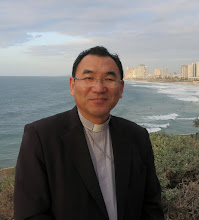
I was sent to a refugee camp in Bukavu, then Zaire, in March, 1995 and stayed there for 2 months as a coordinator of Caritas Japan. That was my first encounter with Rwanda issues and also my first assignment with Caritas Japan.  (Photo above is myself in 1995 in Birava camp over looking Rwanda behind me over lake Kivu)
 
During my stay there, our camp was attacked by unidentified armed group and more than 30 refugees were killed. Caritas Japan team, two Sisters and two priests, were not hurt. It was a horrible experience of 2 hours of shooting which I will never forget. At the end of the shooting, the armed group bombed a storeroom of medicine in the camp clinic. I will never forget the sound and shake of that bombing. I was so shocked that I had difficulty to hold flashlight for a Japanese Sister of Caritas Japan who was a nurse attending those refugees who were shot. Blood all over.
 

We really have to ask why and how these ordinary people could kill their neighbours or even family members because of ethnic differences. Do we really hate and kill each other because we belong to different ethnic group. What is the difference in ethnicity to begin with? It is political agenda of certain group which took advantage of human emotion of self-identification of belongingness. Colonial government took advantage of it before independence and military dictatorship took advantage of that emotion. Radio broadcast was said to be one of the cause of instigating people to kill others. That would be true but radio broadcast alone can not motivate people to kill. Killing has long preparation behind and accumulation of several factors to increase fear among people against other ethnic group without clear reasons. Probably fear does not need clear reasoning. I guess, that is exactly what is happening in several developed countries, not in Africa, today including my home country, Japan.   
 

As we know, Rwanda is quite a Christian country. From the experience of Church in Rwanda we may say that we have to put more and more energy to proclaim Gospel message of love, mercy and forgiveness to people in our respected country. Because even in country like Rwanda where quite majority are Catholics, such horrible incident could not be stopped. If so, then, we really have to work hard to evangelise our culture so that such tragedy could be prevented in future.  
 

Mar 25, 2014

We believe now, because we ourselves have heard him.


To those who are preparing for baptism during the Easter in 2014 in Niigata Diocese:

I am sure there are number of candidates preparing for baptism during this coming Easter in the diocese. As our diocese is quite large and it is not practical or is almost impossible to gather all these candidates in the diocese for a combined rite of election at the Cathedral, I am not sure how many elects are in the diocese at this moment. Unfortunately there are no candidates for baptism in the Cathedral parish this year. In the past, around 50 to 60 adult baptism are confered in all over the diocese every year.

Last Sunday on the Third Sunday of Lent, many of you might have experienced special rite called scrutiny in your parish. Even though in case there are no candidates in parish, the entire community prayed for you. Though Baptism is quite personal matter for your life but it is also the community matter. Entire Catholic communities of Niigata Diocese are walking with you throughout your spiritual journey and supporting you by our special prayers.

On the Third Sunday of Lent this year, story of Jesus with a Samaritan Woman from Gospel of John was read. Water given by Jesus "will become in them a spring which will provide them with life-giving water and give them eternal life". I think those who believe in Jesus are already given this spring within one's heart. However, unfortunately, our worldly thoughts quite often cover and hide the spring so that we do not enjoy this life-giving water.

In the first reading, people of Israel complained against Moses when they found their way ahead was not what they had expected. However that complaining turned out to be challenging against God. We have to always determine whether our way ahead is the way we just wish to happen or the way prepared by God which leads us to the spring of life. Many a time, such way prepared for us by God leads us to completely opposite direction from where we wish to go according to our human wisdom or judgement. Then we complain. We may even say God does not know the reality of our life. But that is the way of God.

I would like to remind all those who are preparing for baptism, one important point from the last part of the Gospel story of a Samaritan Woman.

At the end of this story, people of the town told the woman that "we believe now, not because of what you said, but because we ourselves have heard him, and we know that he really is the Savior of the world."

One of the most important action in our faith in Jesus Christ is self-determination. Our faith is not like depending on someones decision or believing what is written in a book or following someones directives. We can not just depend on others to maintain our faith. We have to make our own decision.

Probably we might have been motivated by others to come to Church. Probably we received the very basics of our faith from others such as parish priests. However, beyond these basics of our faith, we ourselves have to struggle to find out through our own encounter with Jesus. It is precisely "not because of what you said" but we meet him and find out who he is. Our life as Christian always demand us to make choices, to decide and to move on.

Then we do not do this decision making alone in isolation. We do so in our community. Church community is the place which give us general direction towards to God. With brothers and sisters of the community walking and supporting each other, we feel confident to make our own decision. So we need community to show us general direction to God. We are not alone but we are together with members of the community who also meet same Jesus.

As Jesus promised "for where two or three come together in my name, I am there with them (Mt.18:20)" we encounter Jesus in the Church community. He is there. Without our personal encounter with Jesus, we are not able to deepen our faith. At the same time, without community in His name, we can not maintain our faith.

After baptism, unfortunately, number of members just stop coming to Church. Coming to Church is not only fulfilling Sunday obligations. It is not that you are completing requirements for entering Heaven. You have to try your best to be with your community because there you meet Jesus and you are given general direction where you should head for. Then, as I have been saying, rest is all up to you to make your own decision and act.

Mar 4, 2014

Third anniversary of the Great East Japan Earthquake is approaching


The third anniversary of the Great East Japan Earthquake, 11 March, is approaching. Past three years, Catholic Church in Japan mobilized all the Catholic communities in Japan to assist the disaster hit area which is almost all under the Sendai Diocese with a title of the "All Japan" framework. Immediately after the disaster in 2011, Bishop Tani and myself together with Caritas Japan staff members went to Sendai to meet Bishop Hiraga of Sendai diocese and his chancellor, Fr. Komatsu on 16 March in which we decided to establish the Sendai Diocese Support Center (SDSC). That was the beginning of the "All Japan" framework to assist victims in Sendai diocese. Since then, Caritas Japan has been supporting all these activities of relief and rehabilitation in Sendai diocese with long term planning thanks to huge donations from Japan and abroad.

During last general assembly of Japanese Bishops in February, as I have mentioned, Bishops decided to continue this "All Japan" framework for another three years. Catholic Church in Japan will continue our efforts of rehabilitation and Caritas Japan is also ready to support these activities.

Obviously the leading role of reconstruction of the disaster hit area ought to be the local people of the area and Church should not continue the activities just to maintain status quo of our own initiatives. We have to foresee the termination of present activities one day. However, as we know, Church has been in Sendai diocese before the disaster, and it was in Sendai during the disaster and it will be in Sendai for years to come. That means Catholic Church in Japan will never stop our efforts to be with people in the disaster hit area, though our style of commitment may change.


So many people came to join our program as volunteers. There are a lot of different ways to support the local people in the area. Probably there might be some who feel sorry as they were not able to visit the area because of various reasons. In fact, I am also the one. When disaster happened in 2011, I was in charge of two dioceses, Niigata and Sapporo, and was just elected as president of Caritas Asia at that time. Then as a president of Caritas Japan, I was put in charge of the entire operation of the "All Japan" framework. So numerable meetings prevented me to find time to visit the disaster hit area. I am feeling sorry about this. At the same time, my own experience in Caritas activities for long time, such rehabilitation program requires both people on the ground and behind the lines. I hope everyone of us in Catholic Church in Japan to find our own and unique role in this "All Japan" operation and, even though one can not go to the disaster hit area, join the effort of Catholic community in Japan with ones unique way as a part of one body of Christ.  As a Christian, one can even support the activities with prayers. Also it is imperative to be sensitive to the information from the area.

I have a coordination team for the "All Japan" framework. This team coordinates all kinds of initiatives from Catholic communities in all over Japan to assist disaster hit area and also provides platform to exchange information. The team is managed by Fr. Kanda of Osaka diocese and Mr. Hamaguchi, an employee of Osaka diocese. Without these two men who have rich experiences of disaster relief management from Kobe earthquake in 1995, I could not achieve anything. Fr.Narui, SVD, the former Caritas Japan director has joined the team since he was appointed as the SVD generalate JPIC secretary as long as he has time to spare.

Caritas Japan has issued a report of activities in Sendai disaster hit area for past one year. You may find it both in Japanese and English and may download PDF file in this link.

This is the first time for Caritas Japan to organise such disaster relief operation inside Japan itself. We did collection of relief fund for victims of disaster in the past. But what we are doing at this moment is a long term rehabilitation program. On behalf of Caritas Japan, I would like to thank all of you who donated generously to support victims through our program in Sendai diocese. We will continue our efforts.

Bishops Conference of Japan is organising a commemorative Mass of the third anniversary of the disaster at 6 pm on 10 March at Sendai Cathedral, Motodera-Koji Catholic Church. You are welcome to join us.

President of the Catholic Bishops Conference of Japan, Archbishop Peter Okada of Tokyo has made his message public in Japanese. You may read it in Japanese in this link.

In his message, Archbishop Okada highlighted importance of principle of subsidiarity in such relief operation. Though three ecclesiastical provinces, Tokyo, Osaka and Nagasaki, has established their own center for activities in disaster hit area, these activities are complementing the charitable action of local Catholic community of Sendai. Therefore, these provincial centers are part and parcel of charitable activities of Sendai diocese and not acting for its own merits.

Also in his message, Archbishop reiterated the contents of the November 2011 Bishops Message on abolition of nuclear power plants saying that the general direction of Japan after three years of the Fukushima accident is shifting opposite to what Bishops called for in the message. And he put emphasis on the importance of changing life style as necessary step to abolish nuclear power plant. It is not the matter of searching alternative energy sources without changing our life style which just consumes a lot of energy. The original message says as follows.
Christians have an obligation to bear genuine witness to the Gospel especially through the ways of life expected by God; “simplicity of life, the spirit of prayer, charity towards all, especially towards the lowly and the poor, obedience and humility, detachment and self-sacrifice”.We should choose anew a simple and plain lifestyle based on the spirit of the Gospel, in cases like saving electricity. 


In Niigata diocese, all the parishes are asked to say commemorative Mass on Sunday 9th March. I will celebrate Mass at Niigata Cathedral at 9:30am on 9th March. You are welcome to join us in prayer. 


Mar 2, 2014

Appointments and transfers@Niigata Diocese


I have been to Akita over the weekend to attend a graduation ceremony of 170 students of Holy Spirit Girls High School in Akita. The school is run by SSpS sisters and has been considered as one of the most prominent girls only school in the area.Unlike in the case of major cities such as Tokyo, private schools are usually regarded as second choices for students. In general in rural areas, public high schools are regarded as better school than private schools. So without government subsidy, it is quite impossible to run private school in these rural area of Japan. In such a situation, though they also have their own peculiar issues to deal with, Holy Spirit High has been doing quite well. Such Catholic Schools are quite important for the Catholic Church in minority situation like Japan. These schools including our parish KGs provide us opportunity to meet people and talk about Christianity. Though we do not see many baptism from these students, graduates from Catholic schools could be called sympathizer of Christianity. Well congratulations to 170 graduates from the Holy Spirit High.


I am sure that appointments and transfers of Niigata diocese have been announced today in Parishes. Following is the list. (Photo. Top: train from Niigata to Akita. Second: Akita Catholic Church behind a frozen pond.)

Akita district
Fr.Angel Peralta, SVD:  Parish priest of Akita (from Kichijoji parish, Tokyo)
Fr.Felix Lobo, SVD: Parish priest of Noshiro (from Nishimachi parish, Nagasaki)
Fr.He Xiao-Feng, SVD: Associate pastor of Akita (Newly ordained)

Yamagata district
Fr. Hachiro Ban,SVD: Parish priest of Tsuruoka, Sakata (from Noshiro)
Fr.Martinus Pariyanto, SS.CC.: Parish priest of Yonezawa (from Hitachi, Saitama)

Transfer to other diocese
Fr.Sri Waluyo, SS.CC.
Fr.Misao Kawamata, SS.CC.
Fr.Pavol Filadelfi, SVD
Fr. Luis Fernando

Welcome to newly appointed Fathers and our appreciation and gratitude to those who are on transfer to other dioceses.

Feb 23, 2014

General Assembly of Japanese Bishops completed

Catholic Bishops of Japan has just completed their general assembly in Tokyo on 20 Feb with a Mass to commemorate the first anniversary of election of Pope Francis in the Jesuit Parish at the Sophia University, Tokyo. Archbishop Okada of Tokyo who is the president of the conference presided over the Mass while Archbishop Takami of Nagasaki delivered homily. Apostolic Nuncio, Archbishop Chennot delivered his message in perfect Japanese. Bishops are to meet again in Sendai on 10 March to pray for victims of the Great Eastern Japan Earthquake and tsunami in Sendai Cathedral at 6pm in Holy Eucharist. Apostolic Nuncio will also join the Sendai Mass. No photo of the Mass as I was also con-celebrating.

During the general assembly which started on Monday 17 Feb, Bishops decided, among others, to continue relief efforts mobilising entire communities of the Japanese Catholic Church in the disaster hit area for another 3 years. Already entire Catholic communities in Japan have been engaged to the action through the respective ecclesiastical provinces. Three Provinces, Tokyo, Osaka and Nagasaki have established volunteer bases in the area and have been sending volunteers while Caritas Japan has been supplying necessary materials and funds for the activities. These disaster hit area are,in fact, vast area but all under one diocese, Sendai.  So that Sendai diocese under Bishop Hiraga is in charge of entire operation in the area.

Bishops also adopted a new prayer to be used in entire Catholic Church in Japan to pray for victims and for quick recovery of the disaster hit area. At this moment, it is only in Japanese.


Japanese Bishops got unusual international attention recently because of a report sent to Rome. Catholic Bishops' Conference of Japan have published a report in preparation of Synod on Family in October. You may read the contents of the report in this link in English. It is quite accurate account of Japanese Catholics in regard to their understandings of Catholic teachings on marriage and family. It seems not so many bishops' conferences have made this report public but it would be worth to know the situation in a mission territory like Japan.
 

Feb 14, 2014

New Year's Pastoral Letter, 2014 in English


"Living our Lives with Grateful Hearts"

Bishop Tarcisius Isao Kikuchi, SVD
Bishop of Niigata, Japan
 
As we begin a new year, I would like to thank all those who made a contribution to the special fund for the construction of a new bishop’s residence and diocesan offices, from those belonging to the Niigata Diocese, to those from other dioceses, and also to the religious congregations who generously donated. 
 

The work on the main building has been finished and we moved to the new residence in November of last year. However, there is still work to be done on the Vianney Residence Hall, the courtyard, and on the Cathedral itself and so it will still take some time till everything is finished. 

We plan to hold a ceremony to celebrate the completion of work on May 10 of this year. With this we can say that since our founding as a Vicariate (independent mission territory) 100 years ago, we have become not just self-sufficient but a central figure in the mission of the Church to spread the Gospel.  

It is with this in mind that I plan to fully utilize the residence and its offices to proclaim the Gospel and minister to the people. A detailed financial report of the donations and its use in the construction will be made at a later date and will be available to everybody.

 
Living with Grateful Hearts


The third year anniversary of the Great East Japan Earthquake and subsequent tsunami will be upon us in just a couple of months. From the very first days of that tragic event, the Catholic Church in Japan, with [ All Japan ] as its rallying cry, has lent its support to the Diocese of Sendai. The help it has shown has come in the form of volunteers who worked in the affected areas, those who provided logistical support, those who prayed and those who gave donations, plus others who gave other forms of support. In all of these activities, the Church communities have more than shown the diversity in its members. 

Much as I would like to say that with the passage of time the tsunami affected areas have bounced back, unfortunately that cannot be stated with some certainty. Catholic volunteer groups working in areas along the coast have given us regular reports almost on a daily basis through e-mails, and the consensus is that the road to recovery will not be a quick one. 

Among other things, because of the negative effects of the nuclear plant accident, there are still places in Fukushima where the residents cannot yet return to their own homes. There are still a lot of people who cannot see a clear future, and suffer from anxiety over health and everyday living conditions. We can only imagine how many people want to live ordinary lives but cannot do so even though what hinders them are things they could not control and was no fault of their own. 

Our diocese is one which is in close proximity to the Diocese of Sendai, and so rather than establishing an office in Niigata itself to oversee the help we give to Sendai, we deemed it much more personal and effective to let the parishes help and lend support in their own way. It is my hope that we will continue to extend a helping hand in whatever capacity we can to our brothers and sisters in need of assistance. 

Last year in November, typhoon number 30, International name: Haiyan. (Typhoon Yolanda in the Philippines) wrecked havoc in the Philippines. It specially did heavy damage to the island of Leyte and its neighboring islands. The death toll was enormous. We know that there are many Filipinos living in our diocese, and there are those among them whose relatives and acquaintances were among the typhoon victims. The various parish communities and their Filipino parishioners have already begun their respective drives in order to raise funds and donations for those affected by this calamity. The community at Shinjo Church have been televised offering their prayers, and people living in their vicinity have personally brought their donations to the church. 

While Caritas Japan has established a fund for the recovery of the affected areas, please do not forget our brothers and sisters from the Philippines who belong to our parishes and give them whatever support you can offer, be it prayers or material and financial donations. 

During the Great East Japan Earthquake we were given courage by the solidarity that people from all over the world afforded us. Our fears turned into hope, and instead of anxiety we were given peace of mind. During that time, we received from the Philippine Church messages of support, together with prayers and monetary contributions. With grateful hearts, let us now remember how important it is to help and support one another. If we have received much, let us show our gratitude by practicing our faith with acts of love for those in need. 

During the General Audience of Pope Francis in Nov 6 of last year, he said the following: 

“Without love no gift or charism could serve the Church, for where there is not love there is an emptiness that becomes filled with selfishness….that is why it is necessary that love unite us. Our smallest gesture of love benefits everyone! Therefore, to live out unity in the Church and communion in charity means not seeking one’s own interests but sharing the suffering and the joy of one’s brothers (cf. 1 Cor 12:26), ready to carry the weight of the poorest and the weakest. This fraternal solidarity is not a figure of speech, a saying, but an integral part of the communion among Christians. If we live it, we are a sign to the world, the “sacrament” of God’s love.” 


With a solidarity based on fraternal love, let us work towards making our church communities a “Sign of God’s Love” by our loving service for one another.

 
Living Out our Mission Statement 

When we celebrated the 100th anniversary of the Niigata Diocese in October, 2012, we also came out with our Mission Statement. This was produced as a result of discussions made by the members of the Diocesan Pastoral Council. This will be our priority as we start anew the Church’s mission of proclaiming the Gospel. During the Diocesan Centennial celebrations we received from many of people their signed mission statements along with their personal resolutions. We have kept all of these in the Diocesan Offices. I presume that those who submitted their signed statements have a copy of their own which they keep in their person. It is my hope that you look at it once in a while in order to remind yourselves of your promises and gain renewed energy in order to fulfill those promises. Let us also pray for God’s strength as we acknowledge our own weaknesses, so that we might be given the courage to strive and achieve our goals. 

At the beginning of this year, let us once again review our Centenary Mission Statement: 

[We, the Catholic Diocese of Niigata, comprising the civil prefectures of Niigata, Yamagata and Akita, this year mark the centenary of our foundation as a diocese. We have always striven, as disciples of the Lord Jesus, to live according to the Gospel, and to be witnesses of the Gospel while seeking to grow as Church communities. 

Though we are a small community in this area, we have tried to discern and live out our following the way of the disciples of Jesus as one firmly rooted in the local community. 

Building on 100 years of history, we are determined to proclaim and witness to the value of the Gospel in contemporary society. 

As we make our first steps towards the next 100 years, we proclaim the following points as our priorities. 

1.    To build “Our Church”, one which is filled with joy and compassion through overcoming differences created by age, nationality, and cultural diversity.

2.    Realizing the responsibilities of the Catholic Church in society through exchanges of information within the diocese, districts, and parishes.

3.    To continue to nurture and deepen our faith, so that we may be witnesses of the Gospel both through our words and deeds in the midst of contemporary society. 

We hereby pledge, encouraged by the witness of Blessed Louis Uemon Amakasu who heads the 53 Blessed Martyrs of Yonezawa, our forefathers in faith, that we will face the realities of contemporary society with courage and through our actions will strive always to witness to the love of Christ.] 

From the day that we had our centennial celebrations, we have joined the Church worldwide in observing the Year of Faith. As we spent our days living in the Year of Faith as inheritors of the gift of faith, we once again reviewed the origins of that faith, and renewed our belief that “Faith is choosing to stand with the Lord so as to live with Him (Door of Faith, 10 ), we deepened our resolve to witness to our faith through our words and actions. In that time, Pope Francis, a person who embodied living the Gospel values in word and deed was elected head of the Church. In addition, the Diocese of Niigata participated in the [Night of Prayer with our Lady] organized by the Diocese of Rome. A number of Marian pilgrimage sites were selected from around the world, with the Handmaids of the Servants of the Eucharist in Akita being one of them. We were again able to experience the joy in our faith by joining people around the world in prayer. This prayer event has only reinforced my belief that the convent is an essential part of our journey towards spiritual growth in the diocese. Grateful for the chance to once again examine how we live out our own faith, let us renew also our commitment to be proclaimers of the Gospel of Christ. 

 
In conclusion 

As we begin the new year, we also have new things happening in the Diocese.  In the Nagaoka District of Niigata Prefecture, the parishes of Omotemachi and Fukuzumi in Nagaoka City have merged to become the Nagaoka Catholic Church. We formally inaugurated the new parish with a celebration of the Holy Eucharist on Jan. 5. The two parishes have rich histories and traditions, and I believe that it was a big decision for them to agree to this merger. Many factors were considered including the lack of priestly ministers, the aging parish population, transportation convenience, and the management and maintenance of the buildings. It was only after a series of consultations from both parishes over a number of years, and after consultations with me as head of the Diocese, that the committee in charge was finally able to submit a plan to merge the two parishes. The decision was for the church in Omotemachi to be the new parish center. I would like to express my gratitude to those who made the difficult decision to merge with courage and with love, at the same time acknowledging that the decision was not without pain and sacrifice. 

Vocations to the priesthood remain at dangerously low levels. Of course, it is the Lord who calls so this is not a problem we can solve on our own. However, it may be the case that there are young people in our Diocese who just are not aware yet that they are being called. Let us continue to pray for vocations to the priesthood and the religious life and that the young people who are called might find the courage to answer God’ s invitation. 

On April 29 of this year, there will be a meeting of the Diocesan Pastoral Council. We would like to already request the delegates to prepare reports on the outcome of the various activities during the recently concluded Year of Faith, and the efforts being made on the priorities of the Diocese. It has also come to our attention that parish councils in the diocese have various ways of managing their respective parishes. We would like to have time to exchange ideas as to whether it would be good to adopt just one management system or whether we need to come up with a totally new system of parish management. We would like the members of the Diocesan Pastoral Council to gather the opinions of their respective constituents already as preparation. 

Once again, may God the Father in heaven, who is merciful and loving , shower everyone with abundant blessings specially at the beginning of this new year.

Feb 1, 2014

Earthquake and Tsunami victims support meeting @ Ofunato


The 26th Sendai diocese support meeting took place on 30 January at the Jinomori Ikoino-ie in Ofunato, Iwate prefecture. The Jinomori Ikoino-ie is a volunteer center (base) run by Osaka eccesiastical province and a part of continuous effort of entire Japanese Catholic Church to support rehabilitation program of Sendai diocese. The entire program has been called the "All Japan" program. For the meeting in Ofunato, each of three provinces in Japan sent their bishop in charge, namely Bishop Hamaguchi for Nagasaki province, Bishop Suwa for Osaka province and Bishop Koda for Tokyo province. I attended as a bishop in charge of the "All Japan" and Bishop Hiraga of Sendai was also present as a chair of the meeting. All together 14 people were in presence.


Prior to the meeting in the morning, we invited 4 local people to share the situation and difficulties in the area. As we could see while we were in Ofunato, tsunami hit area has not been rehabilitated as such. Most of the damaged buildings have been demolished but new construction has not been started. The local people told us about this delay of reconstruction. It is mainly because  the government employs laws and regulations for ordinary times for such reconstruction program and not for emergency situation. So especially in Tsunami hit area, reconstruction has been taking too much time as local governments have to have unanimous agreement from entire landowners before they could start any new construction programs. So naturally it takes time.

The tsunami hit area was already less populated and aging area before the disaster. As majority have to live in refuge for already three years, some started to leave the area and settled in other communities. It will be very difficult to re-create communities in these area. People are suffering from just waiting for something to happen.

According to the government statistics, around 270 thousand (270,000) people are still in refuge in all over Japan. Many of them are still living in temporary housings. Catholic Volunteers operates Cafe in many temporary housing area to provide opportunity for people to share their stories and spend time together.

In Ofunato and also other similar coastal areas, subsided land after the earth quake has been big problem. The local governments have resolved that landfill would be only solution to protect people from future tsunami. To do so, all the remaining buildings have to be demolished, though some of them are in practical use at this moment, and land ownerships have to be readjusted. I wonder how long it may take to complete all these process to begin building new communities in the area.


In Ofunato, railway line has been destroyed. Railway company gave up to reconstruct the line and replaced it with bus service. You may see from the photo above. This is a "railway crossing" for Bus service.