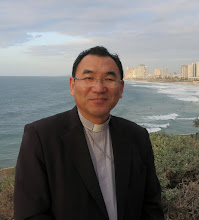
Northern part of Japan has been hit by one of the biggest earthquake in the recent history at 14:46 on 11 March. It was measured magnitude (Richter scale) 8.8 which is the biggest earthquake in Japan since the National Meteorological Observatory began its observation of earthquake in 1923. We still do not know the real picture of the damage caused by the earthquake. Tokyo was also affected. All the train service was stopped till midnight so that people working in Tokyo could not go home today including our staff members in the General Secretariat of Catholic Bishops Conference. Afterquake is still occurring. Several Tsunami have hit wide area of Northen Japan and the National Meteorological Observatory still maintains its waring for major Tsunami at this moment. We still do not know how many people were killed by this Tsunami. There is a quite huge nuclear power plant in Fukushima which has been damaged also. We still do not know how it is at this moment but the government has already ordered those living within 3 km of the plant to evacuate. The plant has stopped immediately after the quake but the facility to cool down the plant was damaged. Most of the affected area is in Sendai diocese. We have difficulty to communicate with Sendai diocese through phones at this moment so that we do not know the damage of Church facilities. Caritas Japan will organise to raise fund. However at this moment, we may not able to organise rescue operation as such. Government has mobilised army for the rescue mission and US army is also mobilised. Church will concentrate on rehabilitation operation after we assess the damage. Miyako city which was hit by Tsunami is my hometown. It was hit by big Tsunami in 1960. Again it was hit by big Tsunami. Please remember victims in your prayer.
As at 1 am on 12 March, according to the National Police Service, 133 people were killed and 536 people are missing. Then 722 people have been injured.
At the moment of the earthquake, I was at the other side of the epicenter. The epicenter, Miyagi, is facing the pacific ocean. I was in a train from Akita going back to Niigata at Yamagata, 150 km west of the epicenter facing to the Japan sea. The train made emergency stop immediately after the earthquake and could not resume the operation. We were standing at the spot for 5 hours. Around 7 pm, the train company provided us transportation by bus to Niigata. I arrived at Niigata by 11 pm.
Mar 12, 2011
Mar 5, 2011
Groundbreaking ceremony in Sanjo KG

In the late afternoon on 2 March, a groundbreaking ceremony for Shirayuri Kindergarten was held in Sanjo despite of cold and windy weather with snow. Because of harsh weather, most of the ceremony was held in a newly built chapel building of Sanjo parish. However, as the most important element of the ceremony which is breaking the ground had to be done outside at the very spot of the construction, we went out to endure cold and strong wind. Fr. Ishiguro, a parish priest and a director of the KG, broke the ground with spade, a symbolic spade made out of wood and was joined by the chairman of the construction company, Mr. Watanabe who broke the ground with a harrow. Staff members of the KG, several parents with their kids and some of the parishioners attended the ceremony.
Sanjo parish has completed the first phase of their renovation plan already by the end of last year when their new chapel with rectory was built. This is the beginning of the second phase. They will build a two story building behind the chapel for the KG which will be connected to the existing two story building. Then after the completion of the new building for the KG, then oldest part of the KG which host present chapel on roof top will be demolished. In order to complete all these construction by the end of summer holidays, the groundbreaking ceremony had to take place in the beginning of March.
I have to congratulate Fr. Ishiguro and entire parishioners of Snajo who managed to accumulate quite a lot of fund to built their new chapel. Of course, they spent quite some time to accomplish their goal.
Mar 1, 2011
Shinjo under heavy snow

On 28 February, I made a pastoral visit of Shinjo Catholic Church, Our Lady of Snow in northern Yamagata prefecture. In fact, even though I made a last-minute decision to visit Shinjo, more than 30 members made good effort to gather for Sunday Mass at 10 am which was 4 hours ahead of their usual Sunday Mass time of 2 pm. 2 pm Sunday Mass. Yes, it is because the Shinjo community does not have their own priest and Fr. Honma of Yamagata is in charge. Yamagata is more than an hour drive from Shinjo.
As you may see from the photo above, and also you may refer to my story of dedication of the Church last October, majority of the community members are from Philippines and their children are also valuable members of the community. It is not so easy to find many kids anymore in our parishes but, here in Shinjo, I could meet so many kids. Filipino members are trying hard to establish good family life in this rural area as a wives of Japanese farmers. And you may see from the photo below, Shinjo is under heavy snow at this time of the year. The community had to spend more than thirty thousand yen (USD 3,500) to hire people to remove snow from the chapel roof. The community owes quite an amount to the diocese to complete their building last year. Now they had to spend more to remove snow. Such a difficulty. But the members are in good smile as usual.

After the Mass they organised a small party to welcome me. Wonderful time to be with them. After so many years in Japan without Church facilities in this rural area, finally they got a place to come together on Sundays. Here they are able to pray together, eat together and share stories together. Thank God for this wonderful gift of people to our diocese.
Feb 24, 2011
SVD Visitator General is in Niigata

Fr. Arlindo Pereira Dias, SVD, one of the SVD general council member is in Niigata diocese since yesterday as the Visitator General of the Japan Province of SVD. Fr. Arlindo, originally from Brazil, has been appointed as the Visitator General of Japan by the Superior General, Fr. Pernia, to visit all SVD communities in Japan and make evaluation on the missionary apostolate of SVD in Japan. According to the Constitution of SVD, this kind of general visitation must be completed every 6 years. It must be very tough job to complete for all these confreres appointed as a visitator since they have to be always on the road visiting different people everyday for almost a month.
I still remember the last General Visitation of Japan 6 years ago because my appointment as a bishop of Niigata was announced while Fr. Konrad Keler, the Vice General of SVD, had been in Japan as the Visitator General. In fact, when I received a phone call from Nuncio on my appointment, the visitator was with me in my car and I was wondering whether I should share this news with him or not since Nuncio had told me to keep quiet till the announcement was made.
Today, Fr. Arlindo is in Nagaoka with Fr. Ferdimar to visit places where Fr. Ferdimar has been executing his ministry for migrants in the diocese. Then he will move to Akita and will meet all the SVD confreres there before he returns to Nagoya to continue his visitation.
I met Fr. Arlindo first time in 2002 in Sao Paulo during the final vows ceremony of one of Japanese seminarians there. At that time I was a provincial of Japan and Fr. Arlindo was a provincial of Brazil Central. So welcome Fr. Arlindo to Niigata and enjoy good food, drinks, people and air in the diocese.
Feb 20, 2011
Bishops met in Tokyo for the GA

Extraordinary General Assembly of Catholic Bishops' Conference of Japan (CBCJ) was held in Tokyo from 14 to 18 February. In fact, this "Extraordinary" meeting is nothing but one of 2 annual meetings of Japanese bishops in February and June. The meeting in June is called the "Ordinary" and February one is called the "Extraordinary" in order not to be confused. Therefore the meeting was not called for emergency issue as such.
Completion of the Japanese translation of the Roman Missal has been our priority for past several years and again, during this meeting, a section from the Holy Week liturgy was brought up as one of the agenda. We also had discussion on the 10th anniversary of the publication of the "Inochi-eno-manazashi (Reverence for Life)" which is "a Message for the Twenty-First Century from The Catholic Bishops of Japan". Our life which is a gift from God has been threatened and in crisis in present world. In Japan, for past 12 years, more than thirty thousand people a year commit suicide. In fact, many of these people were drove to the point where they could not think about any other choices than to take one's own life. In daily news reports, there are frequent stories of incidents that someone took other's life without any specific reasons. Life is in crisis. In 2001, 10 years ago, Japanese bishops wrote as follows.
Japanese society is marked today by anxiety and sadness. Economic stagnation due to the collapse of the "bubble economy," the weakening of family bonds, violence in schools, shocking crimes by children and an increasing number of suicides by middle-aged and elderly people have led many people to think that there is no answer to our longing for light and support.Then 10 good years have passed since this message had been delivered to the Japanese society and the situation of life in Japan is getting worse. We also know that quite a number of new issues have arose which were not included in the message, such as the bioethics issue. Therefore, we felt that Catholic Church who knows that our life if a gift from God has obligation to speak out to Japanese society again. We entrusted a "4-bishop's ad hoc commission" which has been working on the issue of evengelization in Japan to work out on our answer to this call and will discuss about it again in June. You may find the entire text of the 2001 message in English in the HP of the CBCJ.
Yet, God made and loves people. Human life, God's one-time gift to each of us, is sacred. That is the main reason the Catholic bishops of Japan have decided to present this message regarding life and humanity to the world.
We also had study session on Okinawa during the meeting in response to the message by Bishop Oshikawa of Naha on the issue of military base and history of Okinawa.
Feb 12, 2011
Transfers and appointments

April is the beginning of the new school year and new fiscal year in Japan and, therefore, the time for transfers and new appointments. Catholic Church in Japan is no exception of this tradition in Japan and number of dioceses have announced their plan of new appointments recently. As for myself, I had to work on 2 dioceses, Niigata and Sapporo, at the same time and it was not easy. As it has been already announced in Sapporo diocese, there are quite a number of changes especially in the area where Franciscan Fathers (OFM) are working. I learned that the Japan Province of the OFM made a drastic change of focus of their mission in Japan and shifted several confreres within the province. Also they have decided to hand over the administration of several parishes to respective dioceses. Fortunately for Sapporo, OFM decided to add more confreres to work for the diocese.
As for Niigata diocese, OFM also made a decision to hand over the administration of Parishes in Omotemachi, Fukuzumi, both in Nagaoka, and Tokamachi to diocese. Therefore, after the Easter, Fr. Manabu Takahashi, a diocesan priest, will take posts of the parish priest of these 3, Omotemachi, Fukuzumi and Tokamachi. Fr. Bruno Fabbri, OFM, will be transferred to Itoigawa as the cooperative priest working with the parish priest, Fr. Domenic Gandolfi, OFM. Fr. Ferdimar Faminialagao, SVD, will remain in Nagaoka as the assistant. SVD is sending Fr. Jose Lorenzo, SVD also as an assistant to Fr. Takahashi and also work with Fr. Ferdimar for migrants in Niigata. Addition to these appointments, Hanazono parish will get their new pastor. Present parish administrator for a year, Fr. Fernando Parra has been appointed as a parish priest of Hanazono from this Easter.
Another movements in Niigata diocese is for Akita district. Fr. Okazaki, present parish priest of Odate, will also take care of Kazuno at the same time and Fr. Ban of Kazuno and Noshiro will be a parish priest of Noshiro alone. Then SVD is sending Fr. Fransiskus Asisi Moruk, SVD, to Akita as an assistant and Fr. Praful Kujur, SVD, to Odate as an assistant. Fr. Moruk is a new missionary from Indonesia and Fr.Praful is a newly ordained last year and originally from India.
Please kindly remember our dear priests in Niigata and Sapporo diocese in your prayer.
Feb 8, 2011
Pastoral letter on NCW in Niigata diocese
Following is the provisional translation of my pastoral letter on NCW in Niigata diocese issued on 1 February. Original text is in Japanese which you may find in the official site of the diocese.
My dear brothers and sisters of Niigata Diocese,
Peace of the Lord be with you,
re: Neocatechumenal Way in Niigata diocese
Recently, several reports on the issue of Neocatechumenal Way (NCW) and Japanese Bishops have appeared on the National Catholic Weekly, Katorikku Shinbun. I was one of the participants of the reported meeting on 13 December last year in Vatican which had been summoned by Holy Father. In order to explain the situation and also to make an appeal to the faithful in Japan, Archbishop Ikenaga, the president of the Catholic Bishops Conference of Japan (CBCJ) has written an article on the National Catholic Weekly. In view of the situation, I would like to explain the position of our Diocese.
1: Background
NCW has been established in 1964 by a Spanish lay person, Mr. Francisco (Kiko) Gomez Arguello, and others as "one of the forms of diocesan implementation of Christian initiation and of ongoing education in faith" (quote from the Statute). They began their activities in Japan by 1970 in Hiroshima diocese and have spread to other dioceses particularly within Takamatsu diocese.
The Statute of NCW has been approved in 2008 by the Pontifical Council for the Laity and recently their Catechism received an official approval from the Congregation for the Doctrine of the Faith. Therefore, NCW is a group officially recognized within the Catholic Church.
Unfortunately in Japan, setting up of the International Mission Seminary in Takamatsu resulted in division among faithful in parishes, even to the point that former Bishop of Takamatsu was brought to the civil court for the libel case. In 2003, Holy See appointed late Cardinal Kim of Seoul as the Special Delegate to inspect the situation of Takamatsu Diocese. Regarding to this chaotic situation, Archbishop Ikenaga wrote in his article that "there has been rampant confusion, conflict, division, and chaos." In 2004, Bishop Mizobe was transferred from Sendai to Takamatsu to solve problems and create unity in the diocese.
Japanese Bishops for past few years have recognized the situation of Takamatsu as the issue affecting entire Catholic community in Japan and spent quite substantial time to try to find the suitable way out and also made number of negotiation with the Holy See. One of results of the negotiation was transfer of the priest formation of the NCW in Japan from Takamatsu to Rome in 2008. Their seminary for Japan still remains in Rome.
2: Present issue
Japanese Bishops are not in the position of denying the NCW itself which have received an official recognition from the Holy See. Also we are fully aware of number of cases of acceptance of the NCW and their success stories in many dioceses outside Japan. If that is the case, however, we believe that the root cause of division and confusion for past 20 years after the establishment of the seminary in one Japanese diocese that involved laity, religious and priests should be clarified. It can not be said that the replication of success stories in other dioceses outside Japan could be automatically guaranteed also in Japan. In fact, we are also aware of stories of some negative experiences with NCW in several dioceses in other countries.
During the meeting summoned by Holy Father on 13 December last year, 4 bishops from Japan including the president of CBCJ, Archbishop Ikenaga and also myself, tried to explain our situation to Holy Father and several other Cardinals of the Curia. We emphasized our proposal as we had communicated with Mr. Kiko that the best way to find the solution to rectify the situation in Japan was to halt the activities of NCW in Japan for mean time in order to clarify the root cause of the problem and start dialogue between the leadership of the NCW and Japanese bishops after the reflection period. In response, Holy Father, after carefully listened to our points and also of the Curia Cardinals, decided to send his own delegate to Japan instead of halting the activities of NCW.
As of today, the delegate has not been appointed. However, once the delegate will be sent to Japan, he might be coming to Niigata diocese also. In that case, as Archbishop Ikenaga wrote in his article, I will try as much as possible to provide opportunities to everyone who have something to share with the delegate.
3: Position of Niigata Diocese
There are quite a number of faithfuls in Niigata diocese who live their faith in the NCW. First and most, I would like to point out with emphasis that we have a lot to learn from them who are serious in their faith practice.
By the way, there are 2 priests belonging to Takamatsu diocese working in Niigata with our diocesan priests. As for these 2 priests, they have been seconded to Niigata as the "fidei donum" priests under a contract between bishop of Takamatsu and Niigata and, I understand, they should have nothing to do with the NCW as long as they are assigned to parishes in Niigata diocese.
According to the section 2 of the article 1 of the statute of the NCW, "the Neocatechumenal Way is at the service of the bishop as one of the forms of diocesan implementation of Christian initiation and of ongoing education in faith." Then in the section 1 of the article 26 of the statute states as responsibility of a diocesan bishop that "to authorize the implementation of the Neocatechumenal Way in the diocese." Therefore it is my duty as a bishop of Niigata diocese to decide whether I would employ the NCW as the form "of Christian initiation and of ongoing education in faith" for my diocese, Niigata, or not.
As of this moment, I DO NOT employ the NCW as the form of Christian initiation and of ongoing education in faith in Niigata diocese. Also I DO NOT have any plan to employ it in near future for our diocese.
Already in my very first pastoral letter, "Varietate Unitas," I have stated my principle thought for the parish formation as follows. "I do not agree with the idea to employ ready-made methods or specific movements for the formation of parish communities in Niigata diocese."
To be realistic to the present situation of the diocese, it is a simple fact that our parish communities are quite tiny in number of parishioners. It is much more fitting to these tiny communities to be united in one direction and move together than dividing already small community to much more smaller groups. Also for the evangelization in this local situation as a small minority group, being a living witness of gospel values through our presence as united communities which are praying together and assisting each other would be the best way.
In the same reason, I DO NOT think that liturgies, especially for Sundays and Holy Weeks, celebrated in separation from the Parish communities appropriate for our diocese. Of course, under the permission of parish priests, it has been allowed to any groups to organize their liturgies in separation from the Parish communities only in special occasions, such as retreats or conferences.
As we consider the possibilities of evangelization and future of our parish communities, we can not avoid to face changes. What I would like to tell you concerning the present issue is that we have to re-think about ourselves, our way of forming parish communities. We have to think it again and again that how we should be changed to follow the reality of the modern world, how are we to proclaim the gospel and how are we to live the gospel value. Unless each one of us are vitalized by gospel value in respective ways, no methods nor movements could vitalize our parish communities.
Let us pray for the guidance of Holy Spirit over our diocese and the Catholic Church in Japan.
1 February, 2011
Bishop Isao Kikuchi, SVD
Bishop of Niigata
My dear brothers and sisters of Niigata Diocese,
Peace of the Lord be with you,
re: Neocatechumenal Way in Niigata diocese
Recently, several reports on the issue of Neocatechumenal Way (NCW) and Japanese Bishops have appeared on the National Catholic Weekly, Katorikku Shinbun. I was one of the participants of the reported meeting on 13 December last year in Vatican which had been summoned by Holy Father. In order to explain the situation and also to make an appeal to the faithful in Japan, Archbishop Ikenaga, the president of the Catholic Bishops Conference of Japan (CBCJ) has written an article on the National Catholic Weekly. In view of the situation, I would like to explain the position of our Diocese.
1: Background
NCW has been established in 1964 by a Spanish lay person, Mr. Francisco (Kiko) Gomez Arguello, and others as "one of the forms of diocesan implementation of Christian initiation and of ongoing education in faith" (quote from the Statute). They began their activities in Japan by 1970 in Hiroshima diocese and have spread to other dioceses particularly within Takamatsu diocese.
The Statute of NCW has been approved in 2008 by the Pontifical Council for the Laity and recently their Catechism received an official approval from the Congregation for the Doctrine of the Faith. Therefore, NCW is a group officially recognized within the Catholic Church.
Unfortunately in Japan, setting up of the International Mission Seminary in Takamatsu resulted in division among faithful in parishes, even to the point that former Bishop of Takamatsu was brought to the civil court for the libel case. In 2003, Holy See appointed late Cardinal Kim of Seoul as the Special Delegate to inspect the situation of Takamatsu Diocese. Regarding to this chaotic situation, Archbishop Ikenaga wrote in his article that "there has been rampant confusion, conflict, division, and chaos." In 2004, Bishop Mizobe was transferred from Sendai to Takamatsu to solve problems and create unity in the diocese.
Japanese Bishops for past few years have recognized the situation of Takamatsu as the issue affecting entire Catholic community in Japan and spent quite substantial time to try to find the suitable way out and also made number of negotiation with the Holy See. One of results of the negotiation was transfer of the priest formation of the NCW in Japan from Takamatsu to Rome in 2008. Their seminary for Japan still remains in Rome.
2: Present issue
Japanese Bishops are not in the position of denying the NCW itself which have received an official recognition from the Holy See. Also we are fully aware of number of cases of acceptance of the NCW and their success stories in many dioceses outside Japan. If that is the case, however, we believe that the root cause of division and confusion for past 20 years after the establishment of the seminary in one Japanese diocese that involved laity, religious and priests should be clarified. It can not be said that the replication of success stories in other dioceses outside Japan could be automatically guaranteed also in Japan. In fact, we are also aware of stories of some negative experiences with NCW in several dioceses in other countries.
During the meeting summoned by Holy Father on 13 December last year, 4 bishops from Japan including the president of CBCJ, Archbishop Ikenaga and also myself, tried to explain our situation to Holy Father and several other Cardinals of the Curia. We emphasized our proposal as we had communicated with Mr. Kiko that the best way to find the solution to rectify the situation in Japan was to halt the activities of NCW in Japan for mean time in order to clarify the root cause of the problem and start dialogue between the leadership of the NCW and Japanese bishops after the reflection period. In response, Holy Father, after carefully listened to our points and also of the Curia Cardinals, decided to send his own delegate to Japan instead of halting the activities of NCW.
As of today, the delegate has not been appointed. However, once the delegate will be sent to Japan, he might be coming to Niigata diocese also. In that case, as Archbishop Ikenaga wrote in his article, I will try as much as possible to provide opportunities to everyone who have something to share with the delegate.
3: Position of Niigata Diocese
There are quite a number of faithfuls in Niigata diocese who live their faith in the NCW. First and most, I would like to point out with emphasis that we have a lot to learn from them who are serious in their faith practice.
By the way, there are 2 priests belonging to Takamatsu diocese working in Niigata with our diocesan priests. As for these 2 priests, they have been seconded to Niigata as the "fidei donum" priests under a contract between bishop of Takamatsu and Niigata and, I understand, they should have nothing to do with the NCW as long as they are assigned to parishes in Niigata diocese.
According to the section 2 of the article 1 of the statute of the NCW, "the Neocatechumenal Way is at the service of the bishop as one of the forms of diocesan implementation of Christian initiation and of ongoing education in faith." Then in the section 1 of the article 26 of the statute states as responsibility of a diocesan bishop that "to authorize the implementation of the Neocatechumenal Way in the diocese." Therefore it is my duty as a bishop of Niigata diocese to decide whether I would employ the NCW as the form "of Christian initiation and of ongoing education in faith" for my diocese, Niigata, or not.
As of this moment, I DO NOT employ the NCW as the form of Christian initiation and of ongoing education in faith in Niigata diocese. Also I DO NOT have any plan to employ it in near future for our diocese.
Already in my very first pastoral letter, "Varietate Unitas," I have stated my principle thought for the parish formation as follows. "I do not agree with the idea to employ ready-made methods or specific movements for the formation of parish communities in Niigata diocese."
To be realistic to the present situation of the diocese, it is a simple fact that our parish communities are quite tiny in number of parishioners. It is much more fitting to these tiny communities to be united in one direction and move together than dividing already small community to much more smaller groups. Also for the evangelization in this local situation as a small minority group, being a living witness of gospel values through our presence as united communities which are praying together and assisting each other would be the best way.
In the same reason, I DO NOT think that liturgies, especially for Sundays and Holy Weeks, celebrated in separation from the Parish communities appropriate for our diocese. Of course, under the permission of parish priests, it has been allowed to any groups to organize their liturgies in separation from the Parish communities only in special occasions, such as retreats or conferences.
As we consider the possibilities of evangelization and future of our parish communities, we can not avoid to face changes. What I would like to tell you concerning the present issue is that we have to re-think about ourselves, our way of forming parish communities. We have to think it again and again that how we should be changed to follow the reality of the modern world, how are we to proclaim the gospel and how are we to live the gospel value. Unless each one of us are vitalized by gospel value in respective ways, no methods nor movements could vitalize our parish communities.
Let us pray for the guidance of Holy Spirit over our diocese and the Catholic Church in Japan.
1 February, 2011
Bishop Isao Kikuchi, SVD
Bishop of Niigata
Subscribe to:
Posts (Atom)